


Table of Contents
- Custom Workwear Suppliers UK: What Buyers Actually Compare
- Workwear supplier comparison: The criteria that decide it
- Company uniform packages for employees: What belongs in yours
- Workwear samples and sizing: Getting fit right before you commit
- Bulk workwear orders: Pricing, lead times and branding consistency
- Garment picks that hold up in daily wear
- Frequently Asked Questions
Last Updated: 18 October 2026
Custom Workwear Suppliers UK: What Buyers Actually Compare
Most procurement teams discover the gap between a supplier's sales pitch and its actual delivery the hard way: on the third reorder, when the embroidery has drifted and half the batch fits differently. At Corporatewear UK, we have supplied branded workwear since 1996, and the pattern is consistent. Buyers who compare custom workwear suppliers in the UK on a fixed set of criteria, rather than on headline price alone, get fewer surprises and better consistency across repeat orders.
Custom workwear suppliers in the UK are businesses that supply branded uniforms and safety garments to organisations, handling decoration, sizing and bulk fulfilment. The comparison that matters is not who quotes lowest per unit. It is who can hold garment quality, branding and fit steady across every batch you order.
Below, we break down the criteria that decide a supplier comparison, what belongs in a company uniform package, how to get samples and sizing right, and what bulk pricing and lead times should look like.
Workwear supplier comparison: The criteria that decide it
A workwear supplier comparison comes down to five things: decoration consistency, garment durability, sizing accuracy, lead time reliability and total cost transparency. Price per unit is the easiest number to quote and the least useful one to compare on its own.
Here is how we would weigh each criterion before committing to a supplier:
| Criterion | What to check | Why it decides the outcome |
|---|---|---|
| Decoration consistency | Sample of batch 1 vs batch 3 | Logo drift across reorders damages brand image |
| Garment durability | Fabric weight, wash performance | Cheap garments fail in industrial laundering |
| Sizing accuracy | Size set before bulk order | Poor fit means returns and wasted spend |
| Lead time reliability | Written delivery commitment | Missed deadlines hit events and site openings |
| Cost transparency | Full quote including setup | Hidden fees appear at checkout |
The mistake most buyers make is treating the first order as the test. The real test is the third order. Ask any supplier how they keep embroidery and print consistent across repeat batches, and listen for a specific process rather than a reassurance.
Company uniform packages for employees: What belongs in yours
A company uniform package for employees should cover every role that meets customers or works on site, with garments matched to the job rather than a single style applied across the whole business. A hospitality team and a warehouse team need different fabrics and different branding placements.
Start with a role audit. List each job function, then match garments to what the work actually demands:
- Front of house: polo shirts and softshell layers for a clean, consistent look
- Warehouse and logistics: durable trousers and hi-vis where visibility is required
- Site and trade roles: jackets with practical pockets and stretch for movement
- Management: a smarter layer that still carries your branding
Mixing garments for different roles
Mixing garments across roles is where a uniform package earns its keep. The goal is a family of garments that look related, not identical. Keep the logo placement and colour palette consistent, then vary the garment to suit the task.
Our WX3 Eco Polo Shirt at £20.25 suits front-of-house teams, while the Hi-vis pro contract stretch action trousers at £35.91 cover site roles that need certified Class 1 visibility. Same brand identity, right garment for the job.

Workwear samples and sizing: Getting fit right before you commit
Workwear samples and sizing should be settled before a single bulk unit is ordered. Order a size set, have real staff try the garments, and confirm the fit on the people who will actually wear them. This one step prevents the most expensive mistake in bulk uniform buying.
Fit problems rarely come from the supplier alone. They come from ordering to a size chart instead of to your team. A size set lets you see how a garment sits on different body types and how it moves during a shift.
Once you have a confirmed size set, record the sizes per employee and keep them on file. Repeat orders then become a matter of reordering known sizes rather than starting the fitting process again.
Bulk workwear orders: Pricing, lead times and branding consistency
Bulk workwear orders succeed or fail on three numbers: the full landed price, the confirmed delivery date and the branding standard held across every unit. Get all three in writing before you commit to a supplier.
Pricing should be quoted as a total, including setup and decoration, so you can compare suppliers on equal terms. Ask directly what is included and what is not. A quote that looks higher but includes decoration is often cheaper than a low unit price with fees added later.
Lead times need to be realistic and committed. A supplier that promises a fast turnaround should be able to explain how it achieves it, including same-day artwork approval where offered. Branding consistency is the third leg: confirm how the supplier checks that every garment in a batch matches the approved artwork.
Printed versus embroidered branding
Printed branding suits large, detailed or multi-colour logos and works well on flat surfaces. Embroidered branding gives a more durable, textured finish that suits chest and sleeve placements.
Garment picks that hold up in daily wear
Durability is where budget workwear shows its true cost. A garment that fails after a few industrial washes has to be replaced, and the replacement cost wipes out any saving on the original price. Choose fabrics and construction built for the wash cycle your team puts them through.
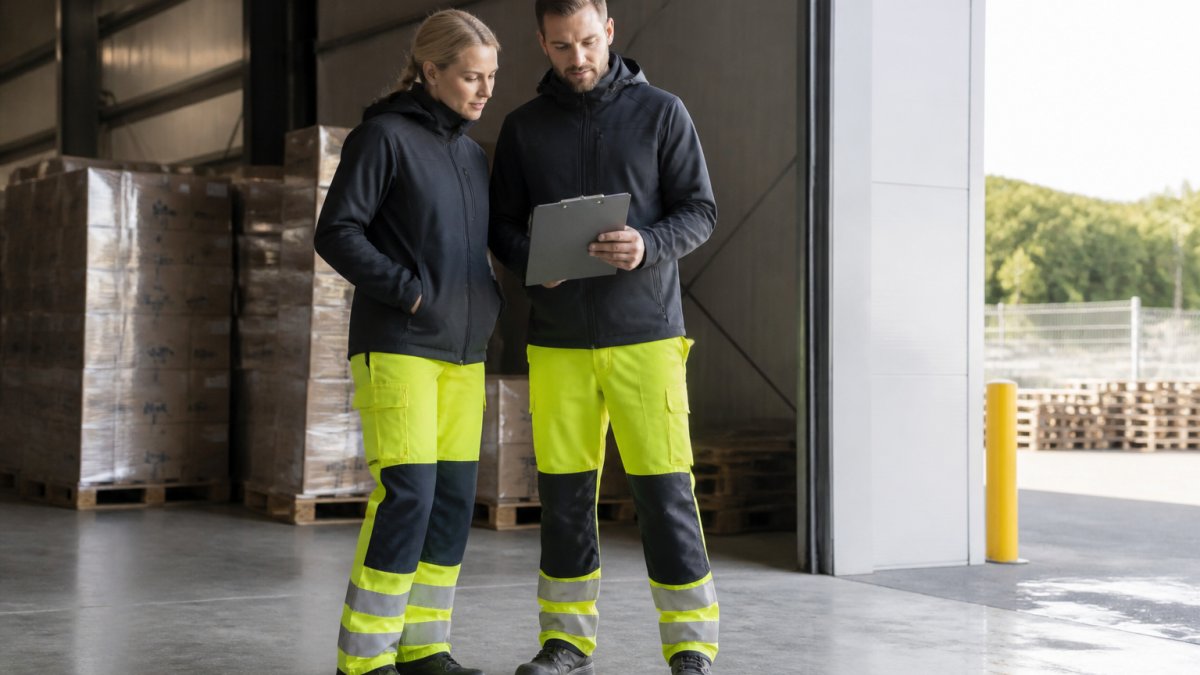
For layering, the Pro universal jacket at £30.51 uses water-repellent micro poplin with stretch inserts and concealed embroidery access, which keeps branding clean. The Expert Basecamp II softshell jacket at £35.91 pairs a stretch outer with a microfleece back for warmth on colder shifts. For trousers built for movement, the WX3 Eco Stretch Holster Trousers at £59.31 use recycled polyester with added stretch.


What most guides miss is that durability and branding are linked. A garment that survives the wash but loses its logo finish has failed just as surely as one that falls apart.
Frequently Asked Questions
How do I choose a custom workwear supplier?
Start with the criteria that affect your day-to-day: turnaround time, branding method, minimum order quantities and how the supplier handles sizing across a large team. Ask for a sample garment before committing, check whether artwork approval is same-day, and confirm what happens if a deadline is missed. A supplier that gives you firm lead times in writing and a clear price breakdown before you order is usually the safer choice for repeat bulk workwear orders.
What should I look for when comparing workwear suppliers?
In a workwear supplier comparison, weigh five things: garment durability for your sector, embroidery or print consistency across batches, samples and sizing support, total cost including setup fees, and delivery reliability. Ask each supplier how they keep logo work consistent on repeat orders and what their actual turnaround is, not their advertised one. Price matters, but a cheap order that arrives late or fades after ten washes costs more in the long run.
What is the difference between printed and embroidered workwear?
Embroidery stitches the logo into the fabric, which suits uniforms worn daily. Print sits on the surface and works better for detailed multicolour designs or lightweight fabrics. Many company uniform packages for employees mix both: embroidery on polos and jackets, print where the artwork demands fine detail.
Can workwear suppliers provide samples before a bulk order?
Reputable suppliers let you see and handle a garment before you commit to a full run. Use the sample to check fabric weight, fit and how the branding looks in person. For sizing, ask for a size set so staff can try garments on before you place bulk workwear orders. This step prevents the common problem of ordering fifty uniforms and finding half don't fit, which turns into wasted money and returns.
How much does branded workwear cost per employee?
Cost depends on the garments you choose. In the Corporatewear UK range, a WX3 Eco Polo Shirt starts at £20.25, the Pro universal jacket is £30.51, and the Expert Basecamp II softshell jacket is £35.91. Hi-vis pro contract stretch action trousers are £35.91 and WX3 Eco Stretch Holster Trousers are £59.31. A full uniform package per employee typically combines a top, trousers and outerwear, so budget from these garment prices plus any branding setup.
Choosing between custom workwear suppliers in the UK comes down to consistency, not the lowest quote. Corporatewear UK brings over 25 years of experience, a price match guarantee, a 5-7 day turnaround and same-day artwork approval, so you can equip your team without the reorder surprises. Get a quote from Corporatewear UK and dress your whole team in durable, consistently branded workwear.


