


Table of Contents
- What Makes Fabrics Durable for Industrial Wash Cycles
- Industrial Washable Fabrics: Materials That Perform
- Polyester Cotton Workwear: Why This Blend Dominates
- Industrial Wash Testing: Understanding Quality Standards
- Workwear Shrinkage and Colourfastness: Maintaining Appearance
- Key Durability Criteria When Selecting Durable Fabrics
- Maximising Fabric Longevity Through Proper Care
- Frequently Asked Questions
Last Updated: 17 October 2026
What Makes Fabrics Durable for Industrial Wash Cycles
Durable fabrics for industrial wash cycles must withstand repeated exposure to high temperatures, mechanical stress, and harsh chemicals without degrading. The key is understanding how fabric structure, fibre composition, and construction methods work together to resist wear.

Industrial washing differs fundamentally from domestic laundering. Machines run at temperatures up to 75°C. Garments tumble in large batches with heavy mechanical action. Detergents are stronger. Drying happens at high heat. A fabric that survives ten home washes might fail after two industrial cycles.
What separates durable fabrics from ordinary ones comes down to three factors: fibre resilience, thread strength, and seam construction. Resilient fibres bounce back after compression. Strong threads resist breaking under tension. Well-constructed seams distribute stress across multiple stitches instead of concentrating it in one weak point.
At Corporatewear UK, we've spent over 25 years sourcing and testing fabrics for exactly this environment. The garments we supply must survive hundreds of industrial washes whilst maintaining colour, fit, and appearance. This experience shapes which fabrics we recommend and why.
Industrial Washable Fabrics: Materials That Perform
Not all fibres are equal when it comes to industrial washing. Natural fibres like cotton offer breathability but can shrink and weaken. Synthetic fibres resist shrinkage but may trap heat. The solution lies in blended fabrics that combine the best properties of each.
Polycotton blends dominate industrial workwear for good reason. A typical blend is 65% polyester and 35% cotton. Polyester provides shrinkage resistance and durability. Cotton adds comfort and breathability. Together, they create a fabric that survives industrial washing whilst remaining comfortable for all-day wear.
Canvas fabrics are another strong choice for heavy-duty environments. Canvas is tightly woven, creating a dense barrier against wear. It's heavier than standard cotton, which means it takes longer to break down. Canvas garments cost more initially but last significantly longer in industrial settings.
Twill weaves offer superior durability compared to plain weaves. Twill creates diagonal ridges that distribute stress more evenly. This construction makes twill fabrics less prone to tearing and fraying. Many industrial workwear pieces use twill construction specifically for this reason.
Blended synthetic fabrics like polyester-nylon combinations exist but are less common in workwear. They excel in moisture resistance but can feel stiff and uncomfortable during extended wear. For most industrial laundry environments, polycotton remains the practical standard.
Polyester Cotton Workwear: Why This Blend Dominates
Polycotton has become the default fabric for industrial workwear because it solves the core tension between durability and comfort. Neither pure cotton nor pure polyester does both equally well.
Cotton alone shrinks unpredictably in hot water. A 5% shrinkage rate is common. In a large organisation ordering 100 uniforms, shrinkage means fit becomes inconsistent batch to batch. Polyester resists shrinkage, keeping garments stable across multiple wash cycles.
Polyester alone feels plastic-like against skin. It traps moisture and heat, making workers uncomfortable during physical labour. Cotton absorbs moisture and allows air circulation. The blend balances these properties.
The 65/35 polyester-cotton ratio has become standard because testing shows it delivers optimal performance. Increasing polyester above 65% improves shrinkage resistance but reduces breathability noticeably. Decreasing it below 35% allows too much shrinkage to occur.
Our WX3 Industrial Wash collection uses polycotton canvas fabric precisely for this reason. The trousers, shorts, jacket, and bib and brace are all engineered to endure industrial laundering up to 75°C. Polycotton provides the stability needed for consistent sizing across large orders, whilst the canvas weave adds the mechanical durability required in warehouse and construction environments.

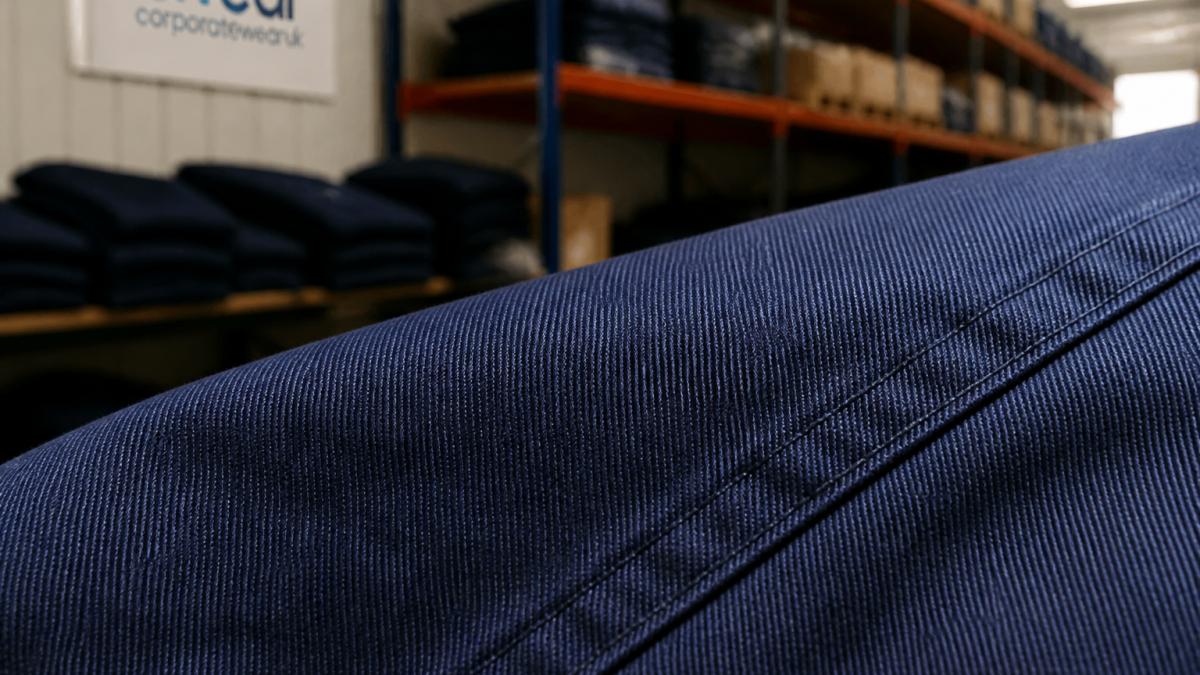
When you're ordering 50 or 500 uniforms for your team, fabric consistency matters enormously. Polycotton shrinks minimally and predictably. Workers know their uniforms will fit the same way after the 50th wash as they did after the first.
Industrial Wash Testing: Understanding Quality Standards
Quality standards exist to ensure fabrics behave predictably after industrial washing. Understanding these standards helps you evaluate whether a fabric will actually survive your laundry environment.
Shrinkage testing measures how much a fabric contracts after washing. Standards typically specify maximum acceptable shrinkage (often 3-5%). A fabric that shrinks 10% is unsuitable for uniform use because garments become unwearable after a few washes.
Colour fastness testing determines whether dyes remain stable under industrial conditions. Colour fastness is rated on a scale. A rating of 4 or higher is generally acceptable for workwear. Lower ratings mean colours bleed or fade rapidly, making uniforms look shabby within weeks.
Tensile strength testing measures how much force a fabric can withstand before tearing. Industrial washing creates significant mechanical stress. A fabric with poor tensile strength will develop tears and holes quickly.
Seam strength testing is equally important. A strong fabric with weak seams fails just as readily. Quality workwear uses reinforced seams with multiple parallel stitches to distribute stress.
These tests aren't theoretical. They directly predict how long a garment will remain serviceable. A fabric that passes rigorous testing will look professional and fit consistently even after 100 industrial washes. One that doesn't will deteriorate visibly within weeks.
When evaluating workwear suppliers, ask whether their fabrics meet recognised industrial wash standards. Reputable suppliers test their materials and can provide documentation. This protects your investment and ensures consistency across your workforce.
Workwear Shrinkage and Colourfastness: Maintaining Appearance
Shrinkage and colour loss are the two biggest threats to workwear longevity in industrial environments. Both are predictable and manageable with the right fabric choices.
Shrinkage happens because heat causes fibres to contract. Cotton shrinks more than polyester. This is why pure cotton uniforms become unusable quickly in industrial laundry. Polycotton blends shrink far less because polyester fibres resist heat-induced contraction.
Pre-shrinking during manufacture reduces shrinkage further. Quality workwear suppliers pre-shrink fabrics before cutting and sewing. This means most shrinkage occurs during manufacturing, not during the garment's working life. Your uniforms remain stable in size across hundreds of washes.
WX3 Industrial Wash Trousers →
Colour fastness depends on dye quality and fibre type. Cheaper dyes fade rapidly under heat and mechanical stress. Quality dyes bond more securely to fibres. Polyester holds dyes better than cotton, which is another advantage of polycotton blends.
Washing temperature matters enormously. Industrial washing at 40°C causes far less colour loss than washing at 75°C. If your facility runs hotter cycles, specify fabrics rated for high-temperature colour fastness.
The WX3 Industrial Wash range is specifically engineered to maintain appearance through intensive laundering. The polycotton canvas resists both shrinkage and colour loss. This means your team's uniforms look professional and fit correctly week after week, month after month.

Key Durability Criteria When Selecting Durable Fabrics
When you're evaluating workwear for your organisation, focus on these specific durability criteria. They separate garments that last from those that deteriorate rapidly.
Weight and density matter significantly. Heavier fabrics resist wear better than lighter ones. Canvas weighs more than standard cotton twill, which is why canvas workwear lasts longer. Check the weight specification (usually given in grams per square metre). Anything below 200 GSM is relatively light. 250+ GSM indicates a strong fabric.
Fibre composition determines how the fabric responds to heat, moisture, and mechanical stress. Polycotton blends at 65/35 ratio represent the practical sweet spot for industrial environments. Pure synthetics feel uncomfortable. High cotton content allows excessive shrinkage.
Seam construction is where many cheap garments fail. Quality workwear uses reinforced seams with multiple parallel stitches. Look for flat-fell seams or double-stitched seams on stress points. Single-stitched seams fail quickly under industrial washing.
Stitch density refers to how many stitches per inch hold the seams together. Higher density (12-16 stitches per inch) is better than lower density (8-10 stitches per inch). Dense stitching distributes stress and prevents seams from splitting.
Pocket construction reveals quality quickly. Reinforced pocket corners with diagonal stitching last longer than simple box stitching. Workers put weight in pockets constantly. Weak pocket construction leads to visible damage within weeks.
Zip and fastener quality affects longevity significantly. Industrial-grade zips with metal teeth withstand repeated washing better than plastic zips. Quality fasteners cost more but prevent garments from becoming unwearable when zips fail.
| Durability Criteria | What to Look For | Why It Matters |
|---|---|---|
| Fabric Weight | 250+ GSM for heavy duty | Heavier fabrics resist wear longer |
| Fibre Blend | 65% polyester, 35% cotton | Balances shrinkage resistance and comfort |
| Seam Type | Flat-fell or double-stitched | Distributes stress, prevents splitting |
| Stitch Density | 12-16 stitches per inch | Higher density = longer-lasting seams |
| Pocket Reinforcement | Diagonal stitching at corners | Prevents pocket failure under weight |
| Fasteners | Industrial-grade metal zips | Withstands repeated washing cycles |
Maximising Fabric Longevity Through Proper Care
Even the most durable fabric deteriorates faster with improper care. Your industrial laundry process directly affects how long garments remain serviceable.
Washing temperature is the single biggest variable you control. Lower temperatures preserve fabrics better. If your facility allows flexibility, 60°C is preferable to 75°C. The difference in longevity is substantial. Garments washed at 60°C remain serviceable significantly longer than identical garments washed at 75°C.
Detergent choice matters more than many people realise. Industrial detergents are stronger than domestic ones, which is necessary for removing heavy soiling. However, excessive detergent concentration accelerates fabric degradation. Use the minimum effective detergent concentration rather than overdosing.
Drying temperature and method affect longevity considerably. Tumble drying at high heat stresses fibres. Line drying or low-temperature drying extends fabric life. If your operation uses high-heat drying, accept that garments will need replacement sooner.
Sorting before washing prevents cross-contamination and reduces detergent requirements. Separating heavily soiled garments from lightly soiled ones means you can use appropriate wash cycles. This reduces unnecessary stress on clean garments.
Load size in washing machines affects mechanical stress. Overloading machines concentrates stress on individual garments. Proper load sizing ensures even washing and reduces wear.
Regular maintenance of washing and drying equipment prevents premature fabric damage. Worn machine drums develop sharp spots that snag and tear fabric. Poorly maintained equipment accelerates deterioration.
The durability you achieve depends partly on fabric quality and partly on how you care for it. Quality fabrics like polycotton canvas provide the foundation. Sensible laundering practices preserve that quality.
Selecting durable fabrics for industrial wash cycles requires understanding how fibre composition, fabric construction, and washing conditions interact. Polycotton blends offer the practical balance between durability and comfort that most organisations need. Canvas weaves and reinforced seam construction add robustness for heavy-duty environments.
At Corporatewear UK, we specialise in workwear engineered specifically for industrial laundering. Our WX3 Industrial Wash range uses polycotton canvas construction, reinforced seams, and quality fasteners designed to survive hundreds of wash cycles whilst maintaining fit and appearance. With over 25 years supplying branded workwear to construction firms, hospitality groups, and logistics companies, we understand exactly what fabrics and construction methods survive in real-world industrial laundry environments.
Frequently Asked Questions
Which fabrics hold up best to industrial washing?
Polycotton blends are the top choice for durable fabrics in industrial wash cycles. The combination of polyester and cotton creates a fabric that resists shrinkage, maintains colour, and withstands repeated high-temperature washing. Pure cotton can shrink excessively, whilst synthetic-only fabrics may lack breathability. Polycotton offers the balance businesses need for workwear that lasts.
What is the difference between domestic and industrial laundering?
Industrial washing uses much higher temperatures (typically 60-75°C), mechanical action, and commercial detergents designed to remove heavy soil and stains. Domestic washing is gentler and cooler. Durable fabrics for industrial wash cycles must tolerate these harsher conditions without excessive shrinkage, fading, or weakening of seams and fibres. Standard household garments often fail under industrial laundering.
How can businesses reduce fading and shrinkage in industrially laundered uniforms?
Select workwear made from colourfastness-tested fabrics with quality dyes that resist bleeding. Polycotton workwear typically performs better than pure cotton. Request pre-shrunk fabric to minimise further shrinkage during industrial washing. Store uniforms away from direct sunlight between washes. Ensure your supplier conducts industrial wash testing before production to confirm the fabric will maintain colour and size after repeated cycles.
Does polyester cotton withstand repeated industrial washing?
Yes, polyester cotton workwear is specifically engineered to withstand repeated industrial washing. The polyester component resists shrinkage and maintains colour, whilst cotton provides comfort and breathability. Quality polycotton blends can endure dozens of industrial wash cycles whilst retaining shape and appearance. This is why it remains the standard for warehouse uniforms, hospitality staff clothing, and construction workwear across demanding environments.


