


Quick Summary
Choose branded workwear suppliers by weighting criteria that matter to your operation, then scoring each supplier on evidence rather than assurances. Quality and delivery reliability should carry the most weight, and total cost should be judged over the garment's life rather than by unit price.
- Weight garment quality and durability at 25 points, the largest share in the suggested scorecard.
- Give delivery reliability and lead time 20 points, based on a committed turnaround in working days.
- Calculate cost per wear, dividing the all-in garment cost by the number of shifts it survives.
- Request physical samples and wash them at the stated temperature before committing to a bulk order.
- Confirm whether the lead time clock starts at order placement or at artwork approval.
Table of Contents
- Why Choosing the Right Branded Workwear Supplier Matters
- Building a Workwear Supplier Checklist
- Assessing Garment Quality, Durability and Fit
- Embroidered or Printed Workwear: Choosing the Right Branding Method
- Printed Workwear: When Screen Printing and Transfers Make Sense
- Lead Times, Minimum Orders and Total Cost of Ownership
- Booking Your First Branded Workwear Order
- Frequently Asked Questions
Why Choosing the Right Branded Workwear Supplier Matters
Last Updated: November 11, 2026
Choosing branded workwear suppliers is one of the few purchasing decisions that every staff member sees, every day. Corporatewear UK has supplied branded workwear and uniforms since 1996. The cost of a poor supplier often shows up long after the invoice is paid.
The stakes are highest for teams that work with the public or on client sites. A logistics team whose hi-vis looks worn, or a hotel team whose embroidery varies from one order to the next, sends a signal about how the organisation is run.
Procurement teams usually notice the problem in one of three places: uneven quality between batches, missed delivery dates, or sizing errors that leave half a uniform order unusable. Each of these is a supplier-selection failure rather than bad luck, and each can be tested for before you commit.
Building a Workwear Supplier Checklist
Before you request quotes, write down what you need the supplier to do. A short checklist keeps comparisons fair and stops a low unit price from hiding gaps elsewhere. The problem with most checklists is that they produce a yes/no answer for each supplier, which tells you very little when two suppliers both say yes to everything. A weighted scorecard forces you to separate the factors that actually matter to your organisation from the ones that merely sound reassuring.
Turn the checklist into a weighted scorecard
Start with the criteria, then assign each a weight out of 100 based on how much a failure would cost you. A common pattern in procurement teams buying uniforms is to weight quality and delivery reliability most heavily, because those are the two failures that disrupt operations. A workable starting weighting looks like this:
- Garment quality and durability, 25 points. Construction, fabric suitability for industrial washing, and evidence of batch-to-batch consistency.
- Delivery reliability and lead time, 20 points. A committed turnaround in working days, plus what happens when it is missed.
- Branding capability and logo consistency, 15 points. In-house embroidery and print, artwork approval process, and how placement is controlled across batches.
- Range, sizing and fit, 15 points. Styles, colours, plus sizes, women's cuts, and whether on-site measuring is offered.
Score each supplier out of the maximum for each criterion, multiply by the weight, and total. A supplier that wins on unit price but scores poorly on delivery and quality will fall down the ranking, which is usually the correct outcome.
Ask for evidence, not assurances
A score is only as good as the evidence behind it. For each criterion, decide in advance what proof you will accept. For experience and reputation, ask for two or three repeat customers of a similar size and sector, and ask whether you can speak to them. For garment quality, ask for the wash-care label and the care temperature on the exact garment you are buying, not the range generally.
Make the scorecard do the work in the meeting
The value of the scorecard is that it lets you justify a decision internally without relying on impressions. When two quotes are close, the weighted total shows which supplier is stronger on the factors your organisation has already agreed matter most. Keep the completed scorecards on file, they are also useful at renewal, because you can score the incumbent against the same criteria and see whether the relationship has actually delivered.
Assessing Garment Quality, Durability and Fit
Garment quality is the factor most often underestimated at the quoting stage. A polo that looks correct on a sample can lose shape and colour after repeated industrial washing.
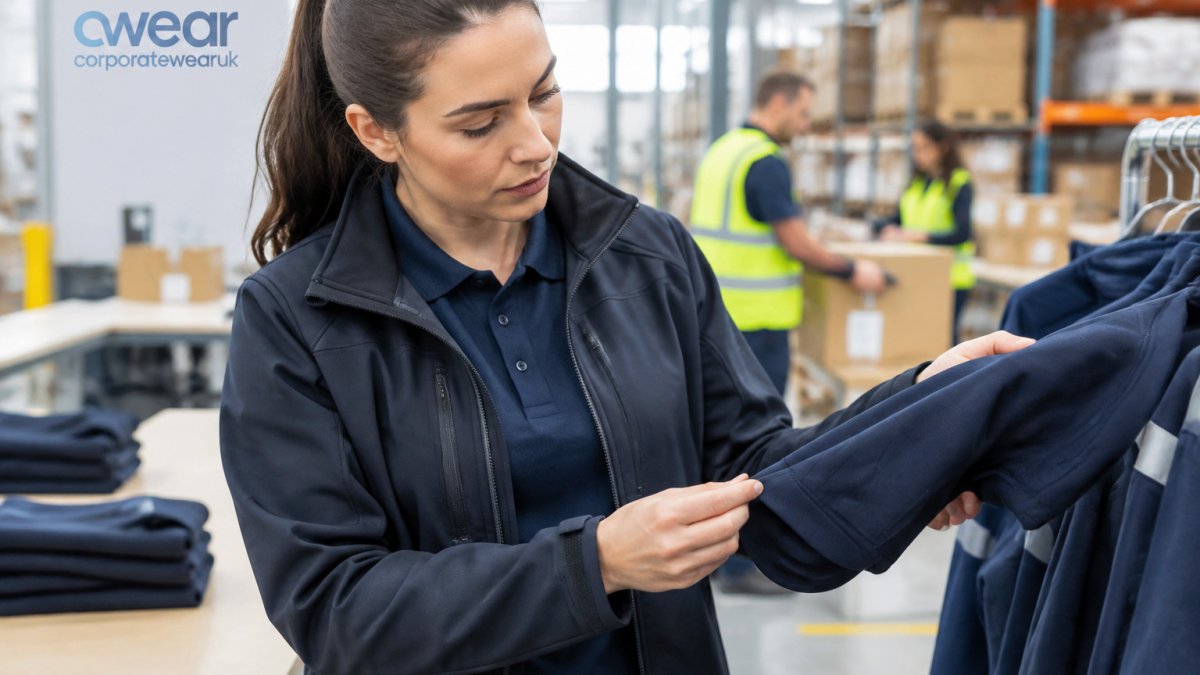
Durability depends on construction as much as fabric.
Fit causes more wasted spend than almost any other factor. Ordering 50 garments in one size chart and discovering half don't fit is a common and expensive mistake.
Testing Samples Before You Commit
Always request physical samples before a bulk order. Test them the way your staff will wear them: wear them through a shift, wash them at the stated temperature, and check the embroidery or print after several cycles. Compare the sample logo with the approved artwork file, not with a previous garment. Note any drift in colour, stitch density or placement, because that is the variation you will see across batches.
Embroidered or Printed Workwear: Choosing the Right Branding Method
The branding method affects durability, appearance and cost, so the choice should follow the garment and the use case rather than default habit.
Ask each supplier which method they recommend for each garment and why. A supplier that offers only one method may steer every order towards it, so a broader capability is worth weighing.
Printed Workwear: When Screen Printing and Transfers Make Sense
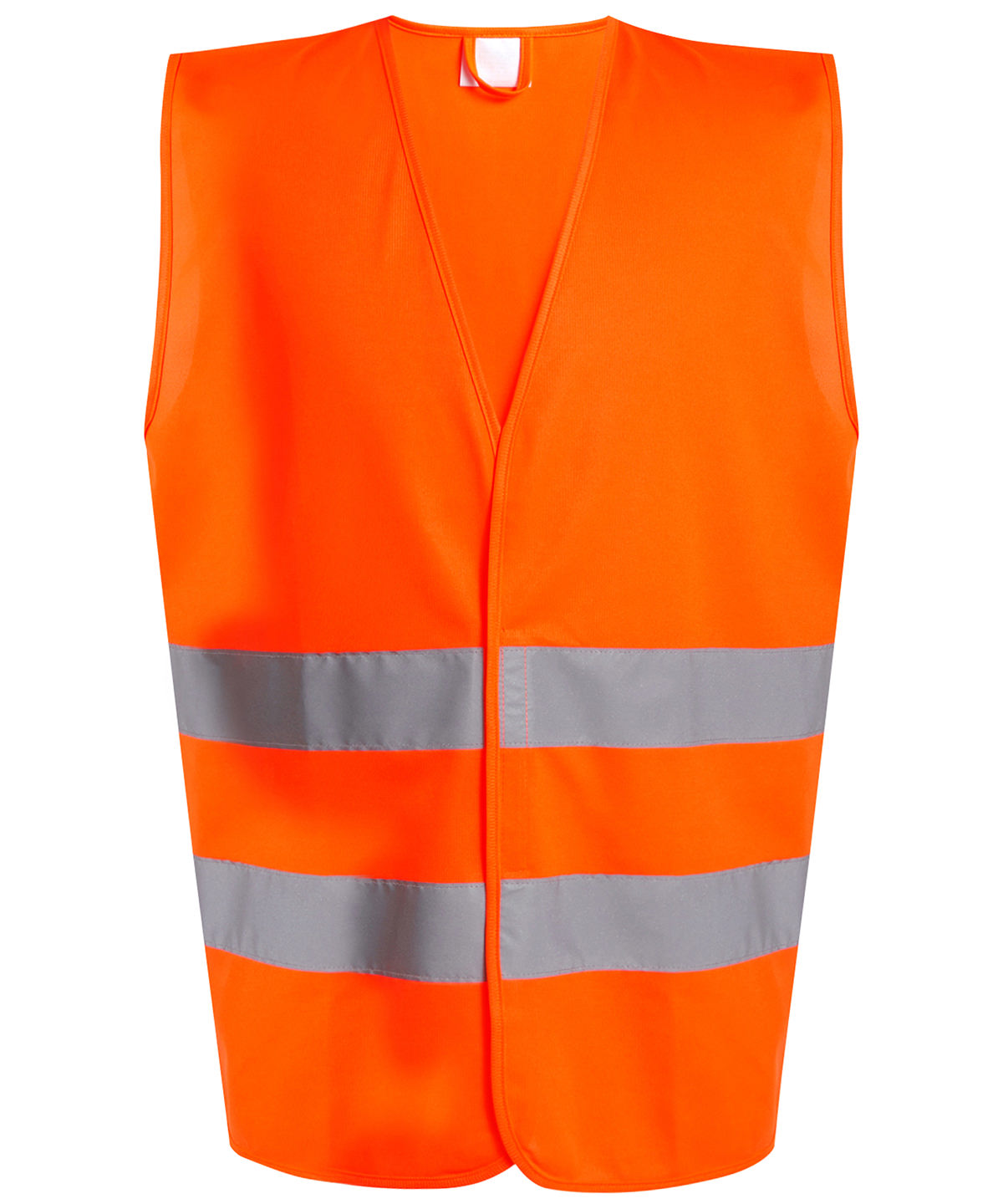
Printed workwear makes most sense for large runs with simple, bold artwork, and for garments where embroidery would add bulk, such as thin layers or high-visibility vests. A printable option is this two-band hi-vis vest, which suits print-based branding. Check how the print is applied and whether it is designed to crack or peel under industrial washing. Request wash-durability data for the exact print method and fabric, and confirm the minimum artwork size that reproduces cleanly.
Lead Times, Minimum Orders and Total Cost of Ownership
The unit price on a quote rarely reflects what the order actually costs. Total cost of ownership is the figure that matters over the life of a uniform programme, and it is built from several components that suppliers do not always put on the same page.
Build the total cost of ownership figure
Ask each supplier for an all-in quote that separates the following, so you can compare like for like:
- Garment unit cost, at the quantity you actually expect to order, not the headline single-unit price.
- Branding cost per garment, including any setup or digitising fee, and whether that fee is charged again on repeat orders.
- Artwork and approval charges, if any.
- Delivery charges, including whether multi-site delivery is priced per drop.
A simple way to use this is to calculate cost per wear rather than cost per garment. Divide the all-in cost of a garment, including branding and delivery, by the number of shifts it is expected to survive. A polo that costs more but lasts twice as long frequently wins on cost per wear, and that is the number to put in front of finance.
Pin down lead times and service levels
Lead times deserve the same scrutiny as price. Confirm the turnaround in working days, and confirm the trigger point: does the clock start at order placement or at artwork approval? Ask what the supplier commits to if a deadline is missed.
Minimum order quantities vary widely, and multi-site teams should ask whether orders can be split across locations without penalty, and whether each site can order separately against the same agreed pricing. Our bulk workwear supplier guide explains how minimum orders and volume pricing typically work.
Agree the after-sales terms before you order
Returns, defects and sizing exchanges are where the relationship is tested. Ask specifically: what is the returns window for faulty goods, who pays return postage, how are sizing exchanges handled, and what is the remedy if an order arrives late or short. Get these answers in writing on the quote or order confirmation, not in a phone call.
The table below sets out the weighted scorecard criteria and their points, as described in the guide.
| Criterion | Points | What to check |
|---|---|---|
| Garment quality and durability | 25 | Construction, fabric suitability, batch consistency |
| Delivery reliability and lead time | 20 | Committed turnaround in working days |
| Branding capability and logo consistency | 15 | In-house embroidery and print, artwork approval |
| Range, sizing and fit | 15 | Styles, colours, sizes, on-site measuring |
| Total cost, not unit price | 15 | Setup, artwork, delivery, returns included |
| Service terms and after-sales | 10 | Defect handling, exchanges, returns window |
Points
Booking Your First Branded Workwear Order
Once you have shortlisted suppliers and tested samples, the final step is to place a clear, complete order. Send a size breakdown per person, the approved artwork files, the branding method for each garment, and the delivery address for each site.
If you are ready to take the next step, Corporatewear UK can talk you through garment choices, sizing and artwork for your team. Get a Quote to confirm pricing and lead times for your order.
Frequently Asked Questions
What should I look for in a branded workwear supplier?
Look first at garment quality, sizing range, branding quality and consistency across batches, lead times, and how the supplier handles defects. Ask for evidence of wash durability and check whether they offer on-site or sample-based fit testing. A supplier with a clear, written service-level commitment for turnaround and returns is usually a safer choice than one that relies on verbal promises. Compare these factors against your own staff numbers, locations and budget before you shortlist.
How do I compare workwear suppliers?
Build a simple weighted scorecard covering quality, price, lead time, service, branding options and experience. Give each criterion a weight that reflects your priorities, score each supplier from one to five, then multiply and total the results. Request the same written quote from each supplier so you compare like with like, including setup fees, delivery and any reprint costs for logo changes.
What is the difference between printed and embroidered workwear?
Embroidery stitches the logo into the fabric, which gives a durable, premium finish that handles repeated industrial washing well. Printing applies ink or a transfer to the surface, which suits larger designs, multiple colours and lower unit costs on some orders. Embroidery is usually the better choice for chest logos on jackets and polos, while printing can work well for large back prints or t-shirts with detailed artwork. Ask suppliers to show both methods on the same garment type before deciding.
How can I check the quality of workwear before placing a bulk order?
Order a pre-production sample in your chosen garment and branding method, then test it in conditions similar to your working day. Wash it several times at the care temperature stated on the label, check seams, reinforcements and zips, and look at how the logo holds up. Confirm the colour matches your brand reference, and check that sizing matches your size chart before approving the bulk run.
What should a workwear supplier quote include?
A complete quote should list the garment price in GBP, branding method and setup charges, artwork or digitising fees, delivery costs, VAT, and any minimum order quantity charges. It should also state the lead time from artwork approval to delivery and what happens if that date is missed. Ask for any reprint or replacement costs in writing so there are no surprises at checkout.
How long does branded workwear take to produce and deliver?
Lead times depend on garment availability, branding method, order size and whether artwork needs approval first. Corporatewear UK offers a 5-7 day turnaround and same-day artwork approval, but you should confirm the exact timeline for your order when requesting a quote. Build in extra time for sampling and approval if you have a fixed event or start date, and ask what the supplier will do if a deadline is at risk.
Can workwear suppliers provide samples before an order?
Most reputable suppliers can provide samples or pre-production approval, though policies and costs vary. Ask for a sample in the actual garment and branding method you plan to order, not a generic example. Use the sample to check fit, fabric weight, colour and logo placement with your team before you commit to a bulk run.
How do I choose workwear that suits different roles and industries?
Start by listing the tasks each role involves, the environment they work in, and any safety requirements such as high-visibility standards. Warehouse staff may need durable, easy-care garments with stretch, while hospitality teams may prioritise a smart, polished look and frequent laundering. Match garment types to each role, and use a small staff trial to confirm comfort and fit before ordering across the whole team.


