


Table of Contents
- Why Staff Uniforms Matter for Brand Identity
- How Branded Workwear Shapes Customer Perception
- Uniform Design Best Practices for Brand Consistency
- Developing a Staff Uniform Policy That Works
- Choosing Workwear for Employees Across Industries
- Building Team Cohesion and Professional Standards
- Maintaining Consistency Across Multiple Orders
- Frequently Asked Questions
Last Updated: October 16, 2026
Why Staff Uniforms Matter for Brand Identity
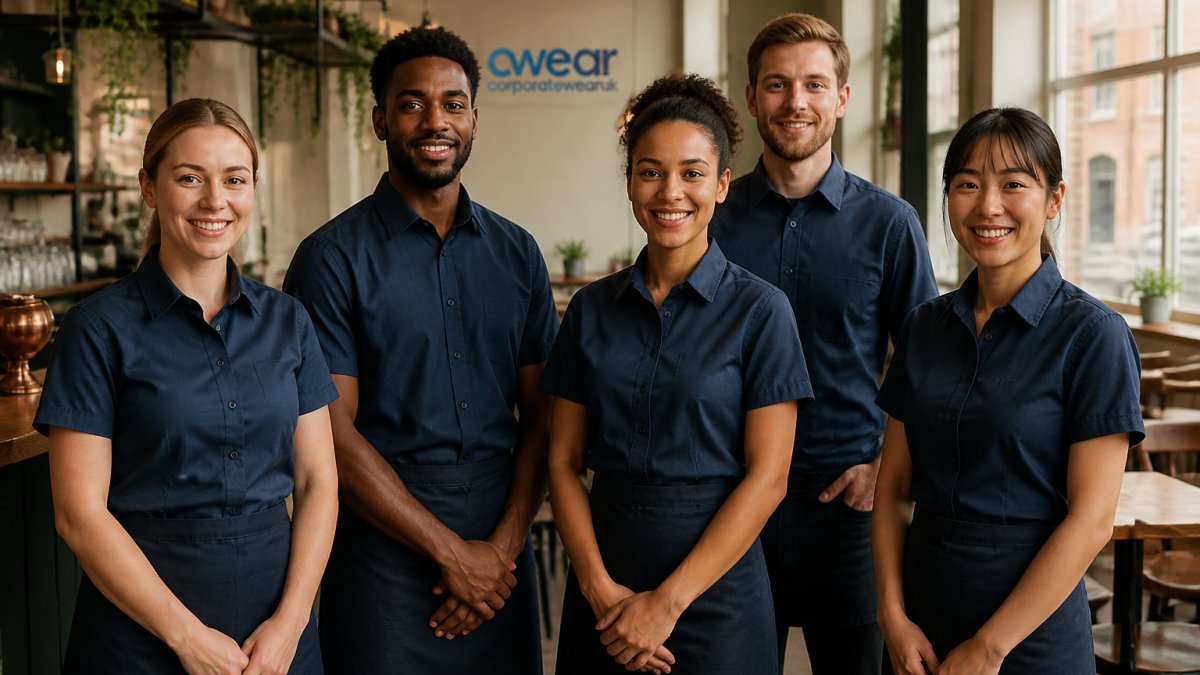
A strong uniform transforms how customers perceive your business, with maintaining brand image through staff uniforms being essential to that perception. When your team wears consistent, professional branded clothing, you're not just dressing them, you're creating a visual identity that speaks before anyone says a word.
Think about the last time you walked into a shop or restaurant. You noticed the staff immediately. Their appearance told you something about the business: whether it was professional, trustworthy, organised. That first impression shapes everything that follows. According to research on workplace appearance and customer trust, customers form opinions about a business within seconds, and staff appearance is a key factor in that judgment.
Uniforms solve a real problem: inconsistency, and they're fundamental to maintaining brand image through staff uniforms. Without them, your team shows up in whatever they choose. One person looks sharp. Another looks casual. The message becomes muddled. Your brand loses coherence.
With uniforms, everyone presents the same front. Your business looks unified, intentional, professional. Customers see consistency. They trust it. They remember it.
At Corporatewear UK, we've worked with hundreds of businesses across construction, hospitality, logistics, retail, and education. The ones that invest in quality branded workwear see a tangible shift in how customers and clients perceive them. The uniform becomes an asset, not just clothing, but a tool for building brand recognition and team pride.
What Uniforms Communicate
A uniform tells your team something too. It says: "You're part of something bigger than yourself." It builds belonging. When people wear the same branded clothing, they feel connected to each other and to the mission. That cohesion matters. It shows in how they interact with customers and with each other.
How Branded Workwear Shapes Customer Perception
Branded workwear isn't decoration. It's communication. Every element, the colour, the logo placement, the fabric quality, sends a message to your customers about who you are and what you stand for.
When a customer sees your team in well-fitted, durable branded clothing, they make assumptions. They assume you're established. Professional. Worth their trust. If the workwear looks cheap or poorly maintained, they assume the opposite. Quality workwear reflects quality in everything else you do.
The logic is simple: if you care enough to invest in your team's appearance, you probably care about your service too. If your uniforms fall apart after a few washes, customers wonder what else is falling apart behind the scenes.
Branded workwear also creates familiarity. When customers see the same logo, the same colours, the same style repeatedly, your brand becomes recognisable. They start to expect it. They look for it. A familiar uniform becomes a shorthand for your business. In busy environments, warehouses, retail floors, construction sites, that visibility matters enormously.
The best branded workwear does something else too: it makes your team visible and approachable. A customer in a shop knows who to ask for help. On a construction site, a visitor knows who the crew is. That clarity improves the customer experience. It makes your operation feel organised.
Uniform Design Best Practices for Brand Consistency
Getting uniform design right requires attention to detail. Too many businesses rush this step, then spend months dealing with inconsistency problems.
Start with a clear brief. What do you want the uniform to communicate? Professional? Approachable? Trustworthy? Technical? Your design should reflect that. A law firm's uniform looks different from a café's uniform. Both are professional, but they communicate different things.
Colour Selection and Logo Placement
Colour is powerful. It's one of the first things people notice. Choose colours that align with your brand identity and work well in your environment.
Bright colours grab attention, useful in safety-critical industries. Neutral colours convey professionalism, better for client-facing roles. Dark colours hide stains, practical for labour-intensive work.
Your logo placement matters as much as the colour. A chest embroidery is visible and professional. A back print is bold and memorable. A sleeve logo is subtle. Think about where customers will see it. If your team faces customers, front placement works. If they're moving around a warehouse, back or sleeve placement might be better.
Avoid cluttering the uniform with too many logos or colours. Simplicity wins. One clear logo, well-placed, is more memorable than three competing designs. The uniform should feel cohesive, not busy.
Fabric Quality and Durability
This is where many businesses fail. They pick cheap fabric to save money upfront, then replace uniforms constantly. That's a false economy.
Quality fabric lasts. It holds embroidery without fraying. It survives industrial washes without fading or shrinking. It looks professional after months of wear. At Corporatewear UK, we've seen the difference. Our Pro polo shirts feature twin-needle stitching for extra durability. That durability means your uniforms stay looking professional for longer.

Consider your environment. A retail uniform faces different demands than a warehouse uniform. Warehouse staff need heavy-duty fabric that handles rough work and frequent washing. Retail staff might prioritise comfort and appearance. Hospitality staff need fabric that breathes and resists staining.
Antimicrobial fabric protection is worth considering in food processing, healthcare, or labour-intensive environments. Our Essential unisex workwear polo includes built-in antimicrobial protection and can be washed at 60 degrees safely, which matters in high-wash environments.
Developing a Staff Uniform Policy That Works
A uniform policy gives structure. It answers questions before they arise. What should people wear? When? How should they care for it? What happens if it gets damaged?
Start by defining what "uniform" means for your business. Is it a full outfit or just a top? Mandatory or optional? Does it include shoes? Accessories?
Be clear about expectations. State exactly what employees should wear, in what situations. "Professional business casual" is vague. "Navy trousers, company polo shirt, black shoes" is clear. Clarity prevents confusion and inconsistency.
Include care instructions. Explain how to wash and maintain the uniforms. Most damage happens because people wash them wrong, too hot, too rough, with the wrong detergent. Good care instructions extend the life of the uniform significantly.
Address sizing and fit. Ill-fitting uniforms look unprofessional and make people uncomfortable. Offer a range of sizes. If you're ordering for a large team, get sizing right before you commit to a big order. A well-fitted uniform from Corporatewear UK looks professional and makes your team feel confident wearing it.
Set expectations around replacement. When does a uniform get replaced? After six months? A year? When it's damaged beyond repair? Having a policy prevents disputes and ensures consistency.
Choosing Workwear for Employees Across Industries
Different industries need different workwear. A construction site demands something completely different from a hotel reception.
In construction, safety is paramount. High-visibility workwear isn't optional, it's a legal requirement in many situations (High visibility clothing). The workwear must be durable enough for rough conditions and visible enough to keep people safe.
In hospitality, appearance matters more than durability. Guests notice the uniform closely. The Contrast Coolchecker polo works well here, it offers a two-tone contrast look that feels professional, and the Coolchecker fabric draws moisture away from the body, keeping staff fresh during long shifts.

In logistics and warehousing, you need durability and functionality. Staff move constantly, handle heavy items, and work in varying temperatures. The uniform needs to survive frequent washing and rough handling. Pockets matter. Flexibility matters. The Essential unisex workwear polo is designed for exactly this, heavyweight, durable, with antimicrobial protection for high-wash environments.
In retail, the uniform should be approachable and professional. It needs to look good but feel comfortable for standing and moving around all day. The Modern long sleeve Oxford shirt offers multiple fit options, slim, regular, or classic, so every team member can find a fit that looks professional and feels comfortable.
In education, the uniform should project authority and professionalism. It's often a smart shirt or polo. Quality matters because staff wear them frequently and they need to maintain their appearance over time.
Choose workwear that fits your environment, your team's needs, and your brand image. The right choice looks professional, lasts longer, and keeps your team comfortable.
Building Team Cohesion and Professional Standards
Uniforms do something psychological. They create unity. When people wear the same thing, they feel part of the same team.
That sense of belonging matters. Teams that feel connected perform better. They communicate better. They care more about their work and about how they represent the business.
A uniform also sets a professional standard. It says: "This is how we show up." It creates accountability. If everyone else is wearing the uniform properly, individuals are more likely to do the same. The uniform becomes a shared commitment to professional standards.
Beyond psychology, uniforms solve practical problems. They eliminate dress code debates. They ensure consistency. They make it clear who works for your business and who doesn't. In busy environments, that clarity is invaluable.
Involve your team in the process when possible. Let them try samples. Get their feedback on fit and comfort. When people have a say in the uniform they'll wear, they're more invested in it. They wear it with more pride.
Maintaining Consistency Across Multiple Orders
Here's where many businesses stumble: keeping uniforms consistent across multiple orders.
You order 50 uniforms in January. They look perfect. Six months later, you need more. You reorder from the same supplier. But the new batch looks slightly different. The colour is off.
Suddenly, your team doesn't look unified anymore. The inconsistency is visible. It undermines everything you've built.
Consistency requires attention to detail from your supplier. This is one of the reasons we ask about embroidery quality in customer conversations, many businesses have had exactly this problem with other providers.
Work with a supplier who takes consistency seriously. Get specifications in writing. Colour codes. Embroidery placement measurements. Sizing charts. When you reorder, reference those exact specifications. A good supplier will maintain them across every order.
At Corporatewear UK, we've been supplying branded workwear for over 25 years. Consistency across multiple orders is something we've refined over decades. Our same-day artwork approval and 5-7 day turnaround mean you get your uniforms fast.
Ask your supplier about their quality control process. How do they ensure consistency? What happens if a batch doesn't match? A supplier who stands behind their work will have clear answers.
Presenting a unified brand image through your team's appearance is one of the most underrated investments a business can make. Quality branded workwear signals professionalism, builds customer trust, and creates team cohesion.
At Corporatewear UK, we specialise in exactly this. With over 25 years of experience supplying branded workwear and uniforms to businesses across construction, hospitality, logistics, retail, and education, we understand what works.
Frequently Asked Questions
How do staff uniforms help build a brand image?
Staff uniforms create visual consistency that customers recognise instantly. When your team wears branded workwear with your logo and colours, it reinforces your brand identity every time a customer interacts with them. This consistency builds trust and professionalism, making your business more memorable. Uniforms also signal that your organisation is established and serious about its standards, which influences how customers perceive your company's reliability and quality.
What should businesses consider when choosing workwear for employees?
When choosing workwear for employees, prioritise fabric durability, fit options across size ranges, and ease of branding. Consider your industry's demands: hospitality staff need smart-casual options like the Contrast Coolchecker® polo (£14.85) with moisture-wicking properties, whilst warehouse teams benefit from heavyweight polos with antimicrobial protection. Ensure your chosen garments can withstand regular washing and maintain their appearance over time. Also verify that embroidery and printing quality remains consistent across multiple orders from your supplier.
How can a business keep staff uniforms consistent with its brand?
Maintain brand consistency by establishing clear guidelines for logo placement, colour schemes, and acceptable sizing. Work with a supplier who guarantees consistent embroidery and print quality across batches. Document your uniform specifications in writing, including fabric type, colour codes, and logo dimensions. Regularly audit uniform quality as new stock arrives, and replace worn garments promptly to prevent your team from appearing unprofessional. Schedule uniform replacements on a set cycle rather than ad hoc ordering.
How often should staff uniforms be replaced?
Replacement frequency depends on your industry and how frequently uniforms are worn and washed. Most organisations replace uniforms every 12-18 months for regular office or hospitality environments. High-wear settings like warehouses or food processing may require replacement every 9-12 months. Establish a planned replacement schedule rather than waiting until uniforms visibly deteriorate, as worn or faded uniforms damage your brand image. Quality garments with features like antimicrobial protection and twin-needle stitching last longer and maintain their appearance through more wash cycles.


