


For most businesses adding a reflective logo to garments, CAD-cut reflective vinyl and reflective heat transfers cover the majority of jobs, from staff uniforms to promotional apparel. For certified safety wear or maximum night-time visibility, retro-reflective screen printing with genuine 3M inks is the stronger fit. Expect single-colour reflective silver artwork as standard, and always request a sample before committing to a production run.
TL;DR:
- Reflective vinyl is ideal for small batches and quick personalisation, while screen printing suits larger, durability-focused orders.
- Authentic 3M inks provide the best night-time visibility, with a matte silver appearance by day and bright flash under headlights or torches.
- Proper application at 143°C to 150°C, careful washing, and authentic materials extend the lifespan of reflective logos across multiple washes.
- Suppliers should provide samples on the actual fabric and genuine 3M inks to ensure reflectivity and durability before full production.
- Reflective branding enhances visibility but does not automatically make garments compliant with high-visibility safety standards.
Table of Contents
- Reflective logo printing applications: garments, stickers and signage
- How reflective printing works: core technologies compared
- Materials, temperatures and how long reflective prints last
- Choosing a method, pricing and order considerations
- Corporatewear UK’s experience with reflective branding
- What to expect from order to delivery
- Reflective branding and hi-vis compliance: a practical view
- Order reflective logo printing through Corporatewear UK
- Sources
- FAQ
Reflective logo printing applications: garments, stickers and signage
Reflective branding covers three distinct product categories, and each pulls towards a different method.
Garments dominate demand: hi-vis jackets, staff uniforms, team sportswear, and outerwear where a logo needs to stay visible after dozens of washes. Stickers and vehicle decals favour reflective vinyl cut to shape, since it sits flat on painted or laminated surfaces and survives outdoor exposure. Signage, particularly safety and directional signs, usually calls for screen-printed reflective sheeting rather than a transfer, because it needs to withstand years outdoors without peeling.
Typical buyer jobs look like this:
- Hi-vis staff jackets for construction or logistics teams, where the logo must read clearly under vehicle headlights.
- Team sportswear with a small reflective badge for early morning or evening training sessions.
- Fleet vehicle decals that need to survive rain, road grit and repeated washing.
- Promotional tote bags or caps where reflective detailing adds a safety touch without dominating the design.
Substrate matters as much as the artwork. A stretch fabric needs a flexible reflective film; a rigid sign panel does not.
How reflective printing works: core technologies compared
Three technologies cover almost every reflective logo job, and understanding the differences saves buyers from ordering the wrong one.
- Reflective vinyl (CAD-cut HTV): cut to shape from a reflective film and heat-pressed onto fabric. It suits small runs, personalised names, and jobs where a single logo needs to go on a handful of garments quickly.
- Reflective heat transfers: often produced as screen-printed gang sheets, then pressed onto garments in batches. These make more sense once order volumes grow, since the setup cost spreads across more units.
- Retro-reflective screen printing: uses micro-glass beads or microprismatic films to bounce light back to its source. Authentic 3M inks read as a matte silver by day and flash bright white under headlights or torchlight at night, which is why it is the go-to choice for safety-critical work.
Screen printing directly onto reflective base material bonds ink to the substrate itself, which tends to outperform digitally printed, laminated alternatives on safety-critical jobs where peeling at the laminate edge is the common failure point. Whichever route you choose, plan for a single reflective colour. Gradients and fine photographic detail rarely translate, so bold, high-contrast logo shapes work far better than intricate artwork.
Materials, temperatures and how long reflective prints last
Getting the substrate and press settings right determines whether a reflective logo survives its first wash or peels within weeks.
Cotton, polyester and cotton-poly blends all accept reflective HTV and reflective transfers well. Avoid highly technical performance fabrics with heat-sensitive coatings, and always check a manufacturer’s datasheet before pressing onto waterproof or laminated shells, since excess heat can damage the base fabric before the transfer even bonds properly.
Reflective HTV is typically applied at 143°C to 150°C, with a representative film thickness of around 142 microns. That thickness gives the logo a slight, tactile presence on the garment rather than sitting flush like a printed ink.
Practical specification points to check before ordering:
- Confirm whether the transfer is a hot peel or cold peel product. Peeling too soon can lift the design straight off the garment.
- Ask for the recommended wash temperature and whether tumble drying is safe.
- Check whether the supplier uses genuine 3M reflective ink rather than an unbranded equivalent, since reflectivity and longevity vary noticeably between grades.
Washed correctly, reflective vinyl and heat transfers hold their finish across a working garment’s typical lifespan. Turning garments inside out before washing and avoiding fabric softener both help preserve reflectivity for longer.
Choosing a method, pricing and order considerations
Run through a short checklist before a supplier conversation, and the right method usually becomes obvious.
- Durability need: daily wear and frequent washing points towards screen-printed reflective transfers or direct screen printing; occasional-use items can work fine with CAD-cut vinyl.
- Batch size: screen printing and specialised transfers suit high-volume, durability-critical runs, while CAD-cut vinyl fits small batches or one-off personalisation.
- Look required: a crisp single-colour logo works across all three methods; anything more detailed needs a proofing conversation first.
- Compliance requirements: safety signage and certified workwear should default to direct screen printing onto reflective sheeting.
Setup costs for screen printing are front-loaded but amortise well across larger orders. CAD-cut vinyl carries little setup cost but a higher per-unit labour charge, which makes it pricier at scale. Always ask a supplier for a physical sample, a mock-up for sign-off, and a technical datasheet covering wash guarantees before placing a full order.
Pro Tip: Request a pressed sample on the actual fabric you intend to order, not a generic swatch. Reflectivity and hand feel can differ noticeably between a cotton tee and a technical hi-vis shell.
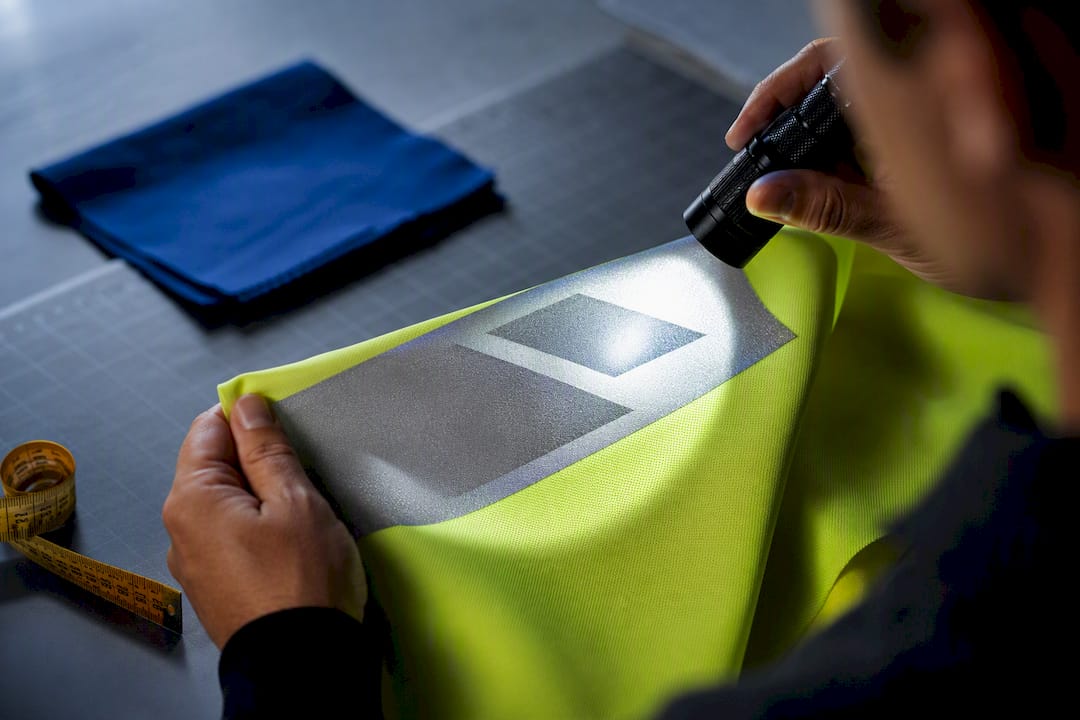
Treat a supplier’s reluctance to provide a sample or mock-up approval step as a warning sign, particularly on larger orders.
Corporatewear UK’s experience with reflective branding
Corporatewear UK has supplied printed and embroidered workwear for more than 25 years, across construction, hospitality, education and security clients who each bring different reflective requirements. Ordering follows a consistent workflow: artwork submission, sample production, mock-up approval, then full-batch printing or embroidery.
Eco-friendly fabric options sit alongside standard ranges for buyers who want reflective branding without sacrificing sustainability commitments.
What to expect from order to delivery
A reflective logo order typically moves through five stages, and knowing the shape of that timeline helps buyers plan around busy seasons or safety deadlines.
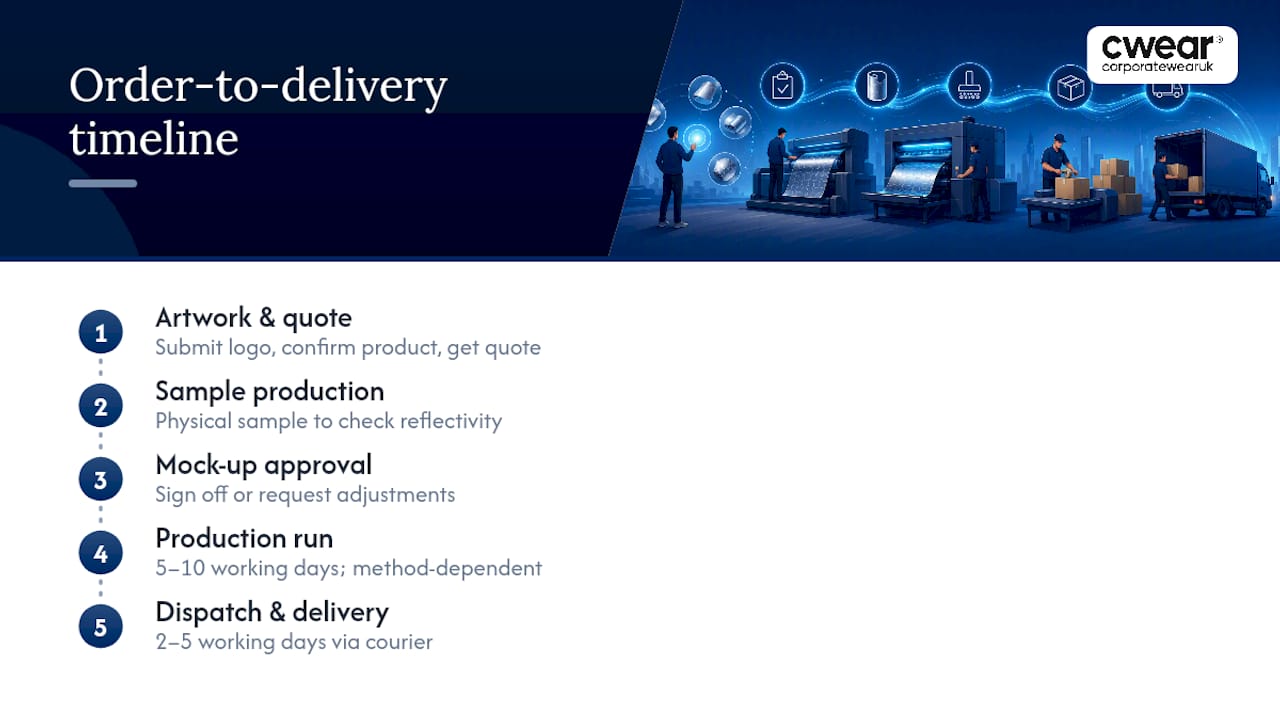
Artwork and quote (day 1 to 2): submit your logo, confirm garment or product type, and get pricing based on batch size and method. Single-colour reflective artwork moves through this stage fastest, since there is no colour separation to debate.
Sample production (typically 3 to 7 working days): a physical sample gets pressed or printed so you can check placement, reflectivity under torchlight, and feel against the fabric. This step matters more for reflective work than standard printing, since day appearance tells you almost nothing about night performance.
Mock-up approval (1 to 2 days, buyer-dependent): sign off the sample or request adjustments. Rushing this stage is the most common cause of reprints further down the line.
Production run (5 to 10 working days for most batch sizes, longer for large volumes or screen-printed sheeting jobs): CAD-cut vinyl orders tend to move fastest since there is no screen setup; screen-printed transfers and direct reflective screen printing need more lead time upfront but often suit larger orders better on a per-unit basis.
Dispatch and delivery (2 to 5 working days depending on courier and destination): garments, stickers or signage arrive ready to distribute or install.
Building a fortnight of buffer around safety-critical deadlines, such as new starter inductions or seasonal hi-vis refreshes, keeps a supplier’s busy period from becoming your problem.
Reflective branding and hi-vis compliance: a practical view
Reflective logos add visibility. They do not make a garment certified high-visibility PPE on their own. Where a job legally requires certified hi-vis, pair the branded logo with a compliant garment rather than treating the logo as a substitute, and always ask suppliers for material datasheets alongside sample approval.
— Vinay
Order reflective logo printing through Corporatewear UK
Some suppliers offer garments tailored for reflective branding beyond standard polo shirts and jackets. The Women’s PW3 Hi-vis ¼-zip sweatshirt (T173) is built for exactly the safety-conscious job discussed above: a certified hi-vis base garment ready for a reflective logo rather than a fashion piece with reflectivity bolted on as an afterthought.
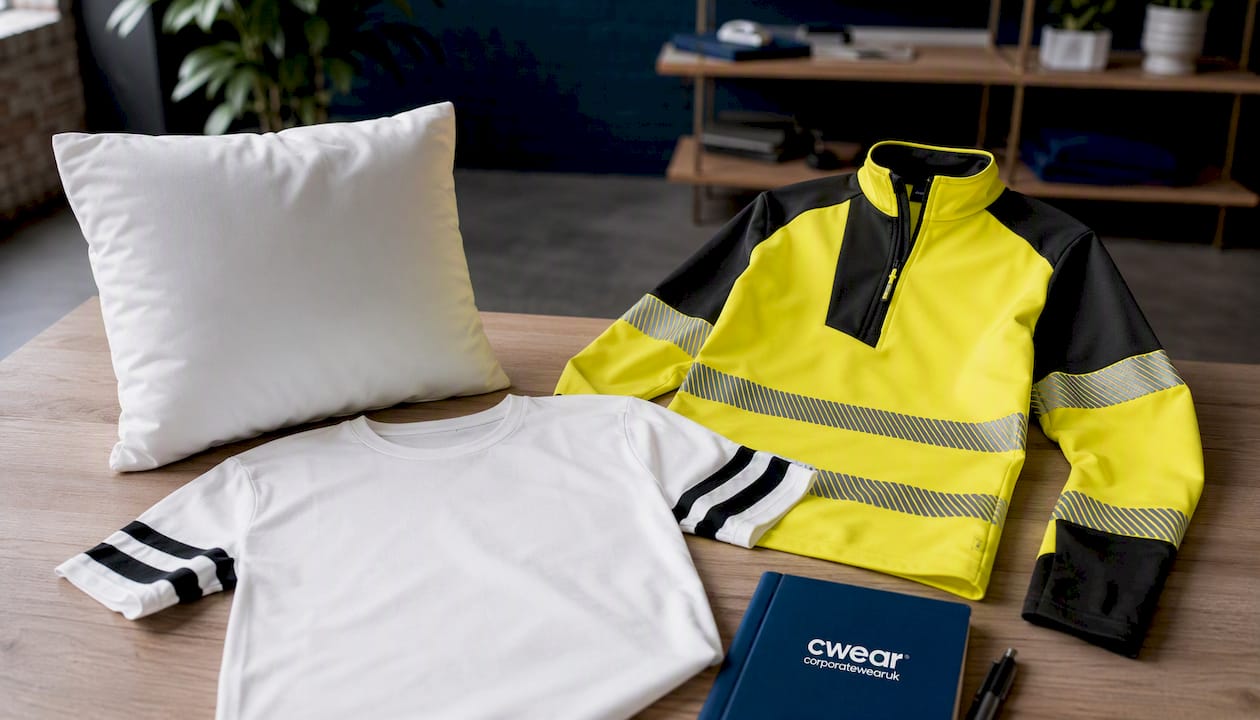
Team and event branding runs through the Stripe Jersey tee, a solid base for a single-colour reflective logo on sportswear or casual staff uniforms, while the Sublimation Cushion Cover covers promotional merchandise where a reflective accent adds a point of difference for site giveaways or client gifts.
Ordering often involves sending artwork, requesting a fabric sample, approving a mock-up, and confirming the production run. Businesses coordinating branded kit across multiple sites or teams often pair this with dedicated contractor and team management tools to keep distribution organised once stock arrives.
Get in touch through the product range to request a quote and a physical sample before your next uniform refresh.
Sources
FAQ
What is a reflective logo?
A reflective logo is printed or pressed using materials such as micro-glass beads or microprismatic films that bounce light back to its source, making the design far more visible in low light than standard ink allows.
Can you get reflective DTF transfers?
Reflective heat transfers are widely available, though most reflective transfer processes remain single-colour rather than full-colour, so check with your supplier whether their reflective range covers direct-to-film or is limited to screen-printed reflective gang sheets.
Can I print on reflective vinyl?
Yes. Reflective vinyl is typically cut into a logo shape with a CAD cutter, then heat-pressed onto the garment rather than printed with standard inkjet or screen-print methods directly onto the vinyl surface.
How long does reflective vinyl last?
With correct application at the recommended 143°C to 150°C press range and proper aftercare such as washing inside out and avoiding fabric softener, reflective vinyl typically lasts across a garment’s normal working lifespan.


